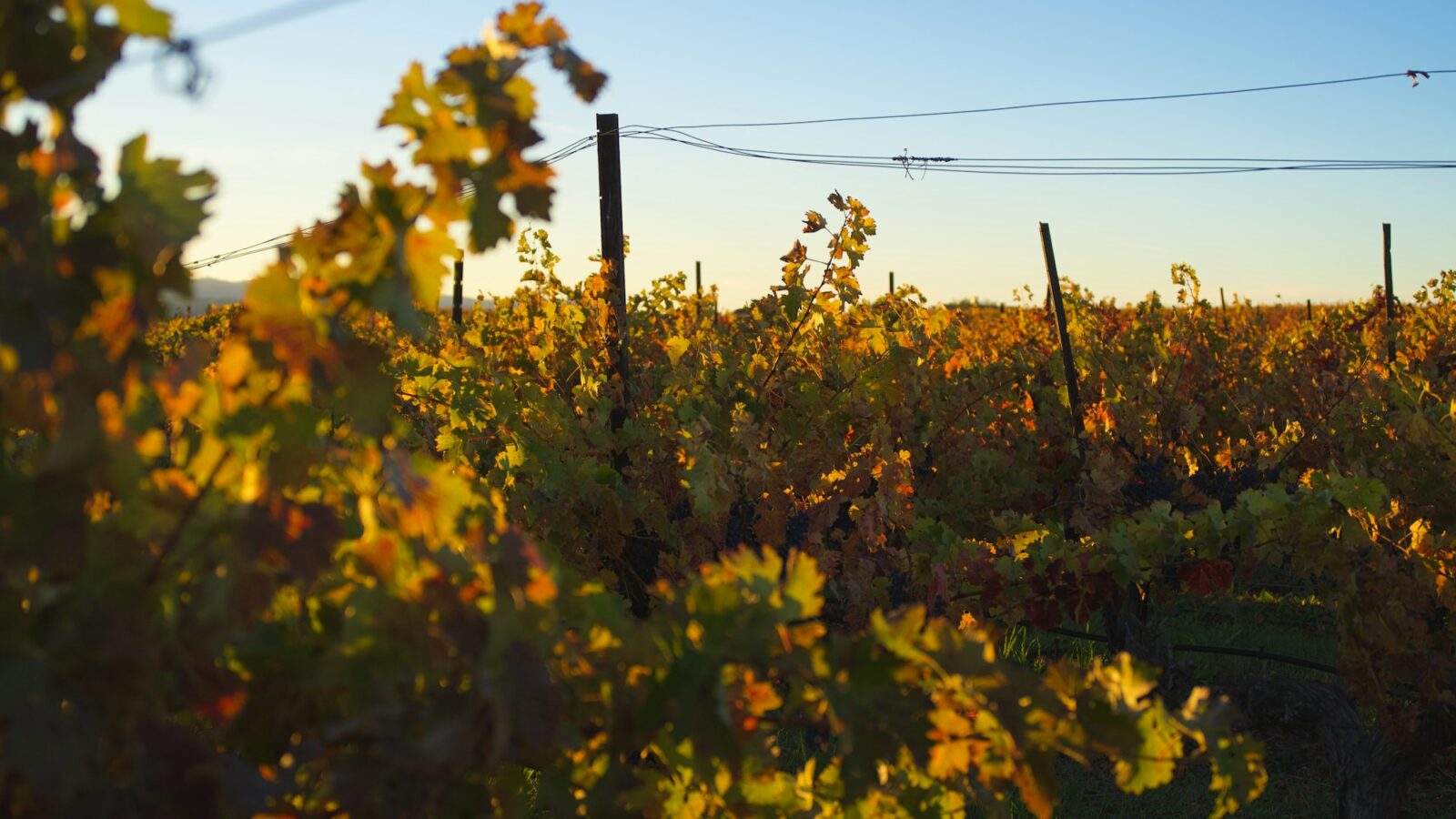
Coombsville sits east of the city of Napa, in the crater of an ancient, long-collapsed volcano. The hills that ring the appellation are what’s left of it, and the soil under Larkhaven’s Cabernet is built from what that volcano left behind — layers of volcanic ash and sedimentary rock, not the alluvial gravel that defines most of the valley floor.
Cooler than the name suggests
“Napa Valley” on a label tends to read as heat — ripe fruit, high alcohol, a lot of sun. Coombsville complicates that. Its proximity to San Pablo Bay pulls in fog and cooling wind most afternoons, even in the height of summer, so the fruit hangs longer before it’s ready. That extra hang time is where the tannins actually finish ripening, rather than the sugars simply climbing while the seeds and skins stay behind.
What volcanic soil actually does
Volcanic soil drains fast and holds almost no water on its own, which forces the vine’s roots to dig deep looking for it. A vine that has to work for water puts less energy into leaf canopy and more into smaller, more concentrated berries — thicker skins relative to juice, which is where a Cabernet’s structure and color mostly come from. It’s a harder soil to farm than the valley floor’s rich alluvium, and it produces less fruit per acre. That trade — less wine, but denser wine — is the whole bet behind planting here.
Thirty-five years of the same bet
None of this is a new discovery for us. Larkhaven has been farming these same volcanic hillsides for thirty-five years, long enough to know exactly which blocks ripen first, which ones need the extra week, and which slope angle catches the most afternoon fog. That’s not a marketing claim — it’s just what happens when one estate stays on one hillside for three and a half decades instead of moving around chasing a different vintage’s conditions.
If you want to taste the difference soil makes rather than just read about it, the tasting room pours the current release alongside older vintages most weekends — reserve a tasting and ask to walk the volcanic-block wines side by side.